Crochet Balaclava: A Free Mesh Hood With 20 Photos
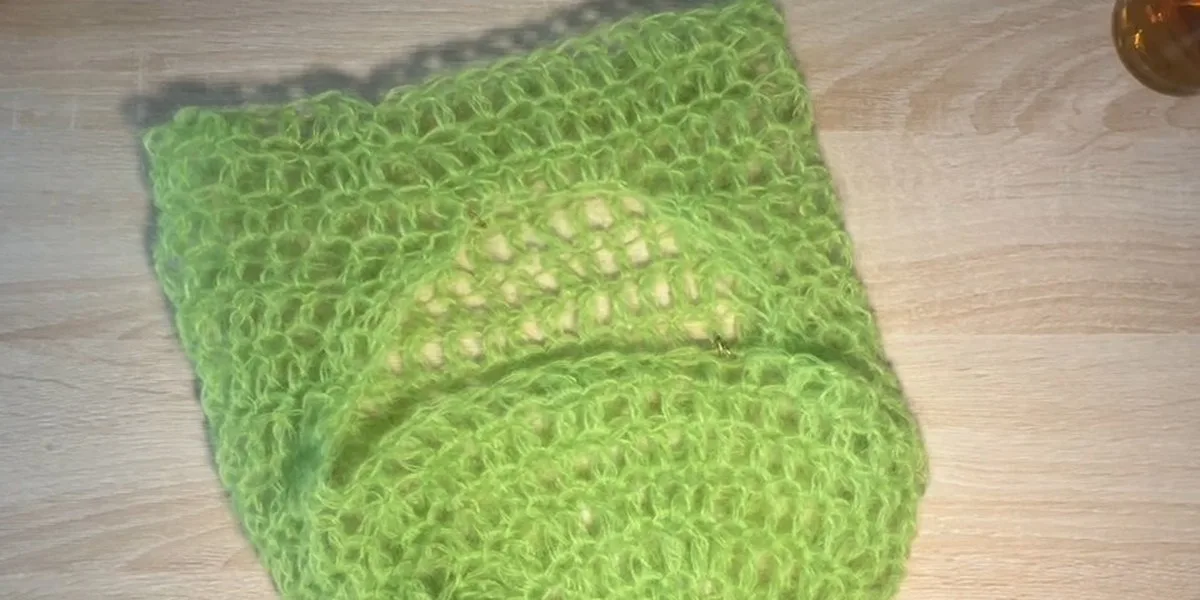
This crochet balaclava is a hood that covers the head, the neck and the sides of the face, worked in double crochet from a magic circle with a 10 mm hook and fine mohair held double. The result is an open, airy mesh. You get every round and row below, with a photo for each stage: five crown rounds, plain rounds, a face opening, two panels worked in rows, a chain that joins them under the chin, and a few neck rounds.
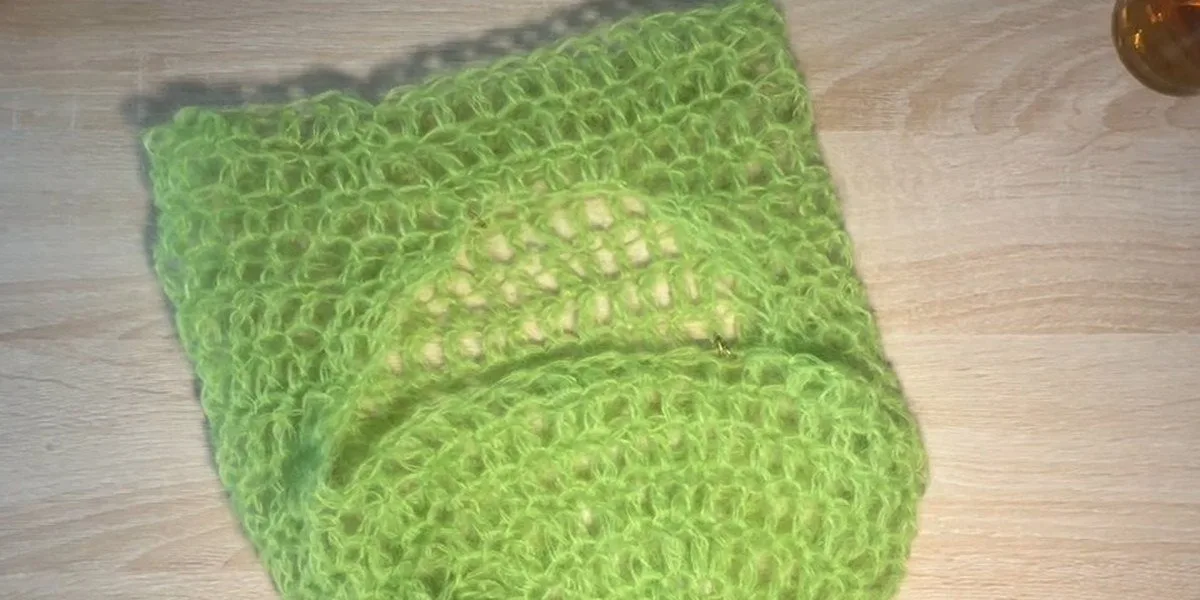
Below the steps you get a stitch count for every round that we worked out ourselves, a head size table, the places a crochet balaclava goes wrong, and five more free balaclava patterns to compare. Where the numbers do not add up, we say so and show our arithmetic.
The correction up front: the written steps of this crochet balaclava label the plain rounds 6 to 9, which would be four rounds, but the worked sample has three before the face opening starts as round 10. Both fit, because the rule is to keep going until the hood reaches your eyebrows. Also, the design prints no stitch counts after round 2, no yardage and no head size, so the counts, the bridge chain table and the sizing advice below are our own arithmetic from the printed repeats.
- Crochet Balaclava at a Glance
- What You Need for This Crochet Balaclava
- Crochet Balaclava: Step by Step
- Crochet Balaclava Stitch Counts by Round
- Sizing a Crochet Balaclava to Your Head
- Where a Crochet Balaclava Goes Wrong
- Making a Crochet Balaclava Warmer or Safer
- Five More Free Crochet Balaclava Patterns
- Crochet Balaclava FAQ
- A Scarf to Wear With Your Balaclava
Crochet Balaclava at a Glance
The crochet balaclava in this guide is one piece. You start in the middle of the crown with a magic circle and grow a flat disc in five rounds, then work plain rounds until the hood comes down to your eyebrows. The face opening comes next: one round that stops about three quarters of the way around, then rows worked back and forth to make two panels. A chain joins the panels under the chin, and a few rounds on top of it form the neck.
| Section | What you work | Stitches |
|---|---|---|
| Crown, rounds 1 to 5 | Double crochet from a magic circle with increases | 12, 24, 36, 45, 54 |
| Plain rounds, 6 to 9 | 1 double crochet in each stitch | 54 each round |
| Face opening, round 10 | Double crochet about three quarters of the way around, then turn | About 41 |
| Panels, rows 11 on | Double crochet back and forth until the length is under your chin | 41 each row |
| Bridge chain | A chain about half as long as the gap, slip stitched to the first stitch | 7 chain for a gap of 13 |
| Neck rounds | Double crochet in each stitch and each chain | 48 each round |
The numbers behind it: by our count the crown of this crochet balaclava holds 171 stitches in rounds 1 to 5 (12 + 24 + 36 + 45 + 54), and three plain rounds of 54 add another 162, so there are 333 stitches before the face opening. The neck ring has 48 stitches a round if you leave a gap of 13 and bridge it with 7 chain (54 – 13 + 7).
What You Need for This Crochet Balaclava
The design uses very little kit. Its list is short: fine mohair or any fine yarn, a 10 mm hook, sewing scissors, a tapestry needle and, if you like, old earrings to use as charms. The sample was made with a super fine mohair held double, which is why it needs such a big hook.
| Item | What to use |
|---|---|
| Yarn | Mohair or any fine yarn, held as two strands |
| Hook | 10 mm |
| Tools | Sewing scissors, tapestry needle |
| Optional | Old hoop earrings clipped on as charms |
| Yardage | Not printed in the design; see the note below |
| Skill level | Beginner: only chains, slip stitches and double crochet |
How much to buy: the design gives no yardage, and we will not guess one. For comparison, three free balaclavas in a heavier yarn print 89 yd for a child and 105 yd for an adult of fleece yarn, about 300 yd of worsted yarn, and 151 yd for a long child’s ski hat. A fine mohair mesh is a much lighter fabric, so those figures do not carry over. Buy one skein more than you think you need, and keep the label so you can match the dye lot.
Stitches and abbreviations
Crochet has two naming conventions, so here are both. This hood uses only three stitches.
| Abbreviation | Name used here | Other naming convention |
|---|---|---|
| ch | Chain | Chain |
| ss | Slip stitch | Slip stitch |
| dc | Double crochet | Treble crochet |
A blanket is chained to a stitch multiple, but this crochet balaclava has none: it starts from a magic circle, so every later count comes from the round before it. In place of a multiple you get three repeats: 2 dc in one stitch, followed by 1, 3 or 4 plain stitches, and each one fits the round it is worked into. That is why the counts below divide exactly: 24 by 2, 36 by 4 and 45 by 5.
Crochet Balaclava: Step by Step
Work the crown of this crochet balaclava in joined rounds, and turn at the end of each row once the face opening starts. Each round begins with chain 3, which counts as the first double crochet, and ends with a slip stitch into the top of that chain 3.
Step 1: Gather the yarn and the 10 mm hook
Lay out the mohair, a 10 mm hook, scissors and a tapestry needle. The yarn is held as two strands, so pull from both ends of the ball or wind a second ball. Set the optional earrings aside for the last step.
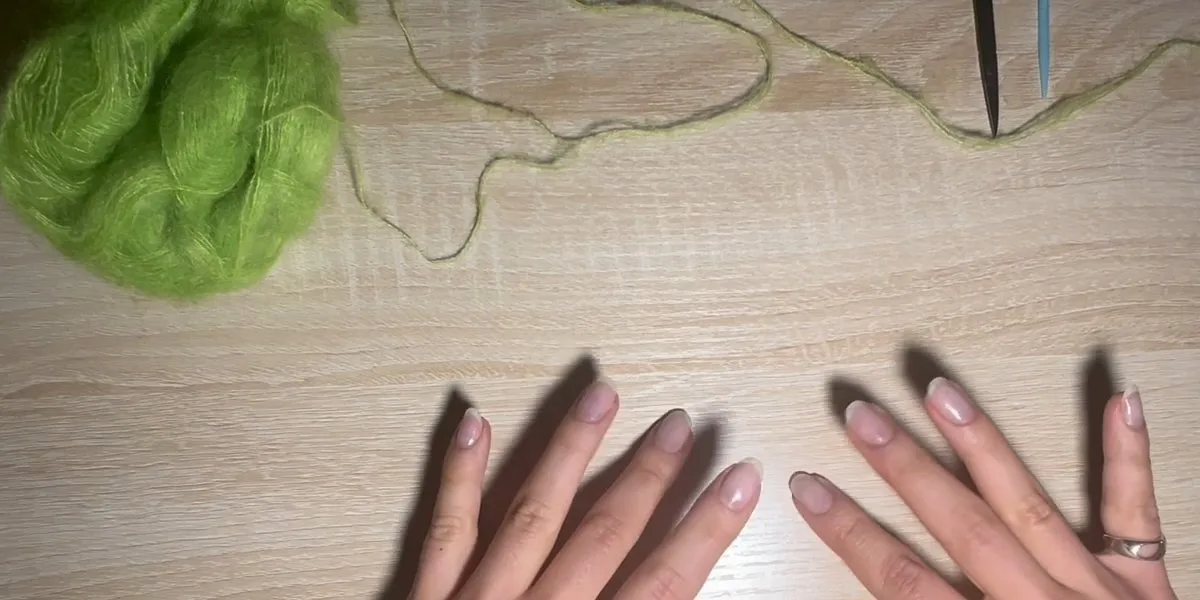
Step 2: Make a magic circle and chain 3
Wrap the yarn around your hand, go over and under, twist, and hold the loop. Chain 3 inside it. This chain 3 counts as your first double crochet.
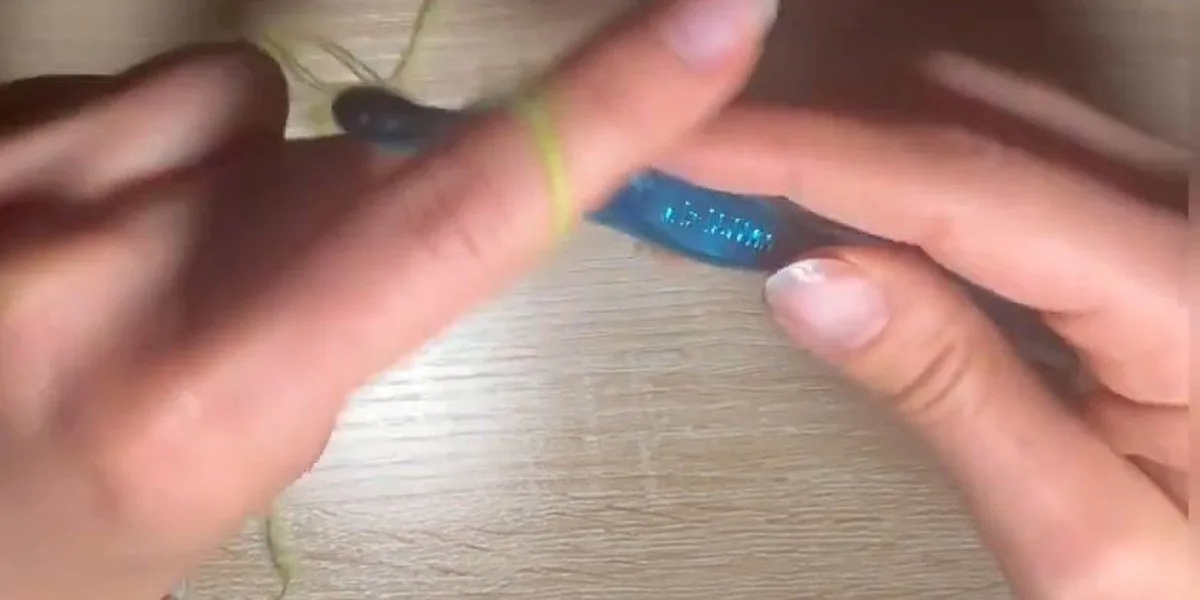
Step 3: Round 1: 11 double crochet in the circle
Work 11 dc into the circle. With the chain 3 that makes 12 double crochet in all.
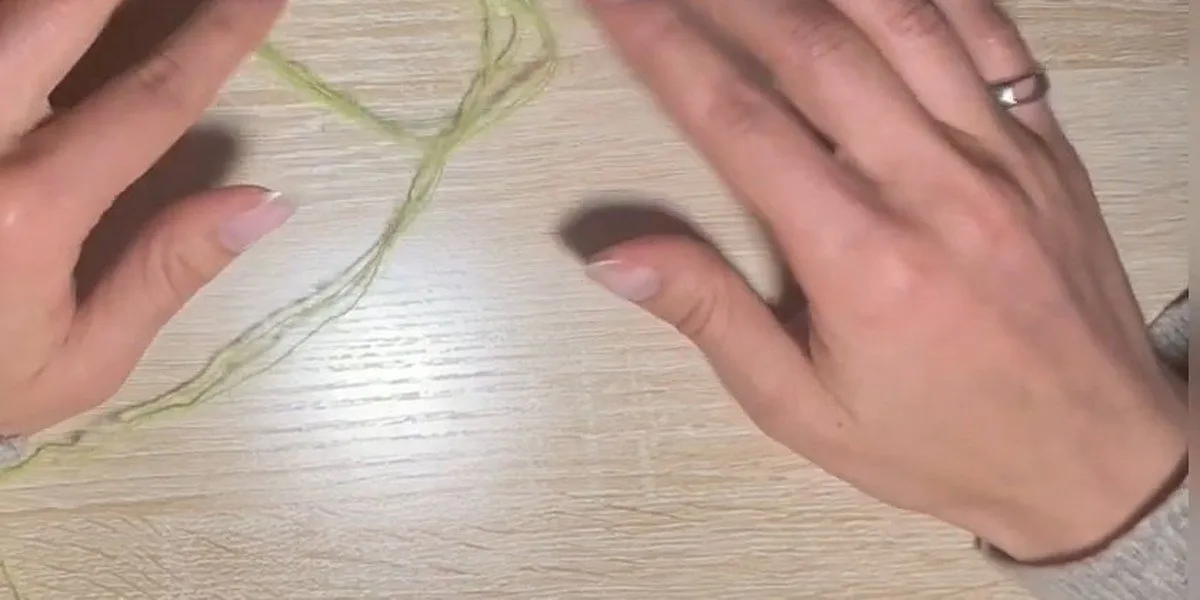
Step 4: Close the circle and join
Pull the tail to tighten the circle until it looks like a small scrunchie, then slip stitch into the top of the chain 3. Count 12 before you go on.
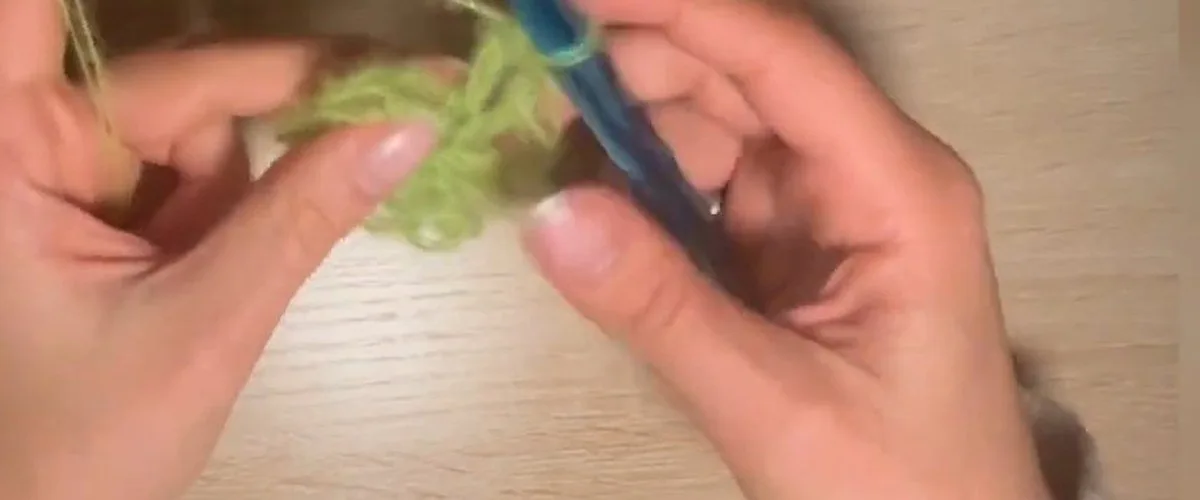
Step 5: Round 2: 2 double crochet in each stitch
Chain 3, then work another double crochet into the same stitch the chain comes out of. Put 2 dc in every stitch around and join with a slip stitch. Round 2 has 24 stitches.
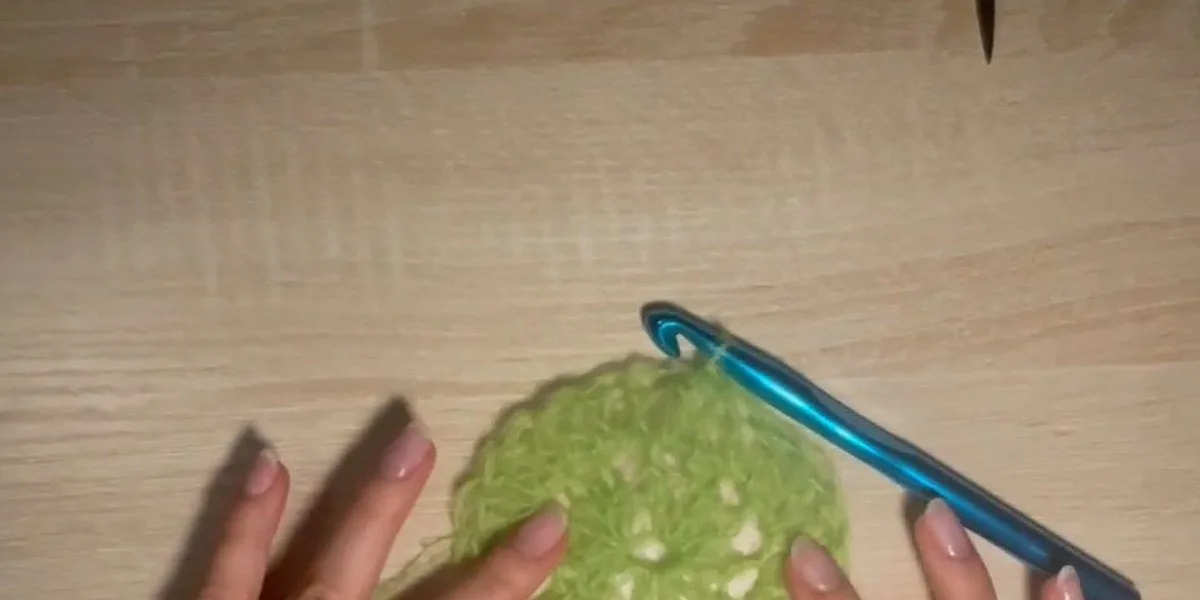
Step 6: Round 3: 2 dc, then 1 dc, repeated
Chain 3, then *2 dc in the next stitch, 1 dc in the following stitch*, and repeat to the end of the round. Join. Round 3 has 36 stitches. The sample closed the gap at the end of this round by putting 2 dc in one extra stitch; the counts here follow the clean repeat.
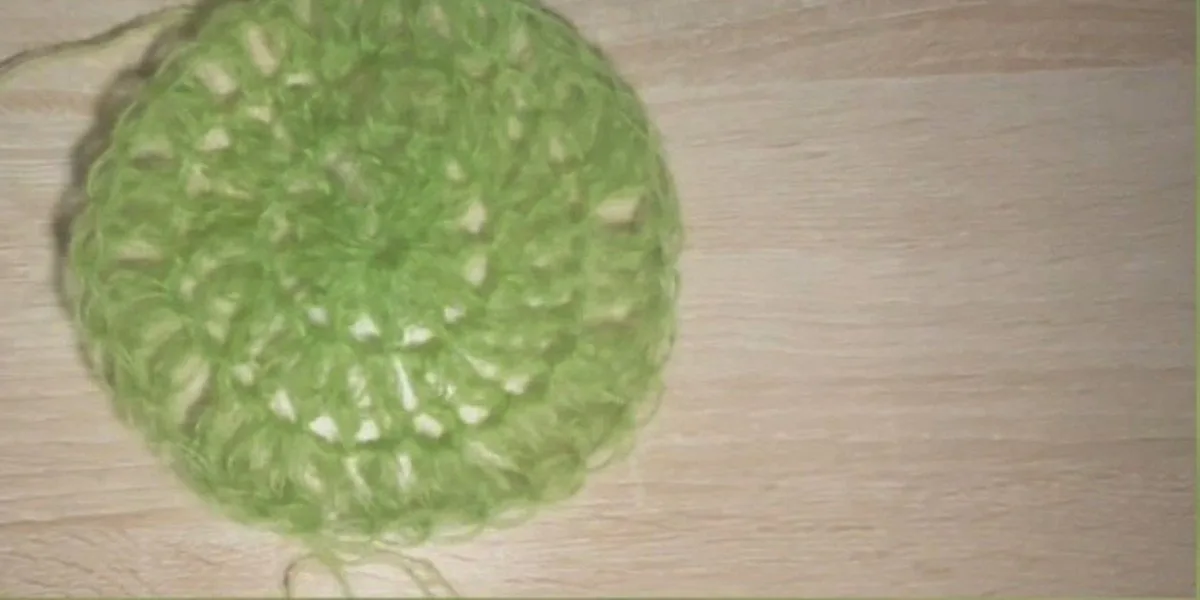
Step 7: Round 4: 2 dc, then 1 dc in each of the next 3
Chain 3, then *2 dc in the next stitch, 1 dc in each of the next 3 stitches*, repeating to the end. Join. Round 4 has 45 stitches. The disc may start to curl in. That is fine, because it becomes a hood.
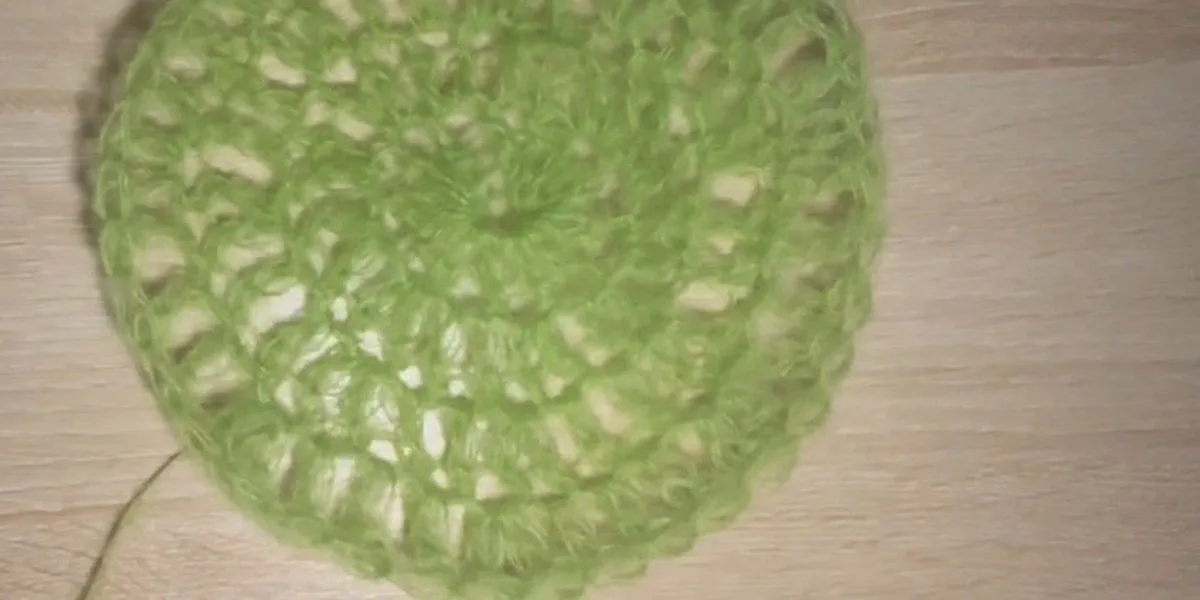
Step 8: Round 5: 2 dc, then 1 dc in each of the next 4
Chain 3, then *2 dc in the next stitch, 1 dc in each of the next 4 stitches*, repeating to the end. Join. Round 5 has 54 stitches. If round 4 already feels wide enough for your head, you can skip this round and work the plain rounds on 45.
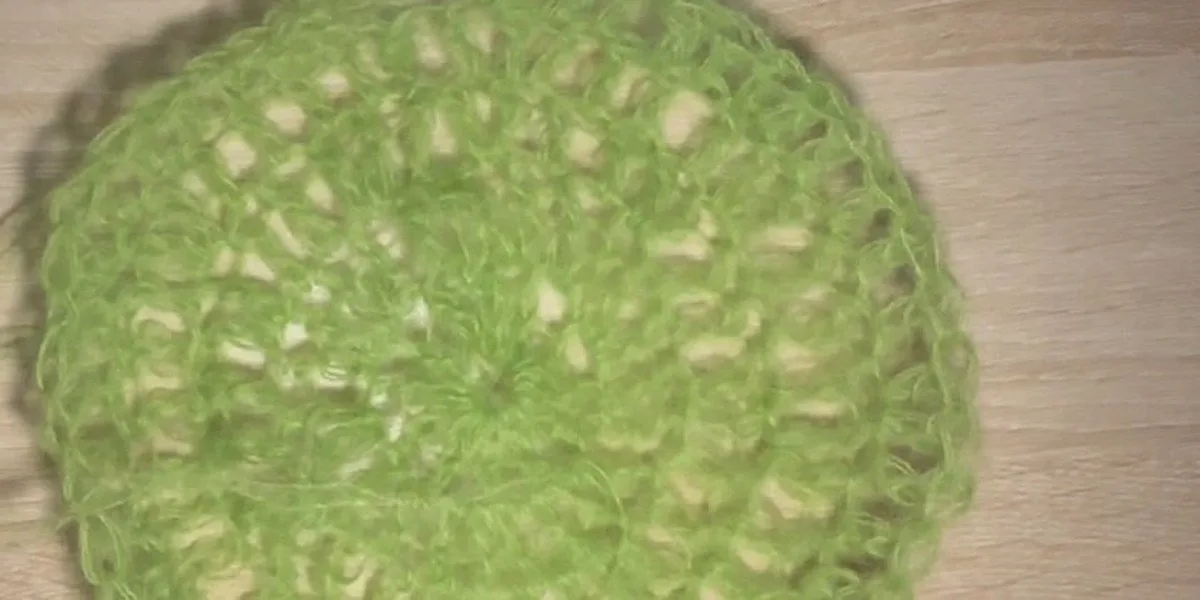
Step 9: Rounds 6 to 9: 1 double crochet in each stitch
Stop increasing. Chain 3, work 1 dc in each stitch, and join with a slip stitch. Repeat until the piece comes down to your eyebrows. The sample used three plain rounds; the written steps say rounds 6 to 9.
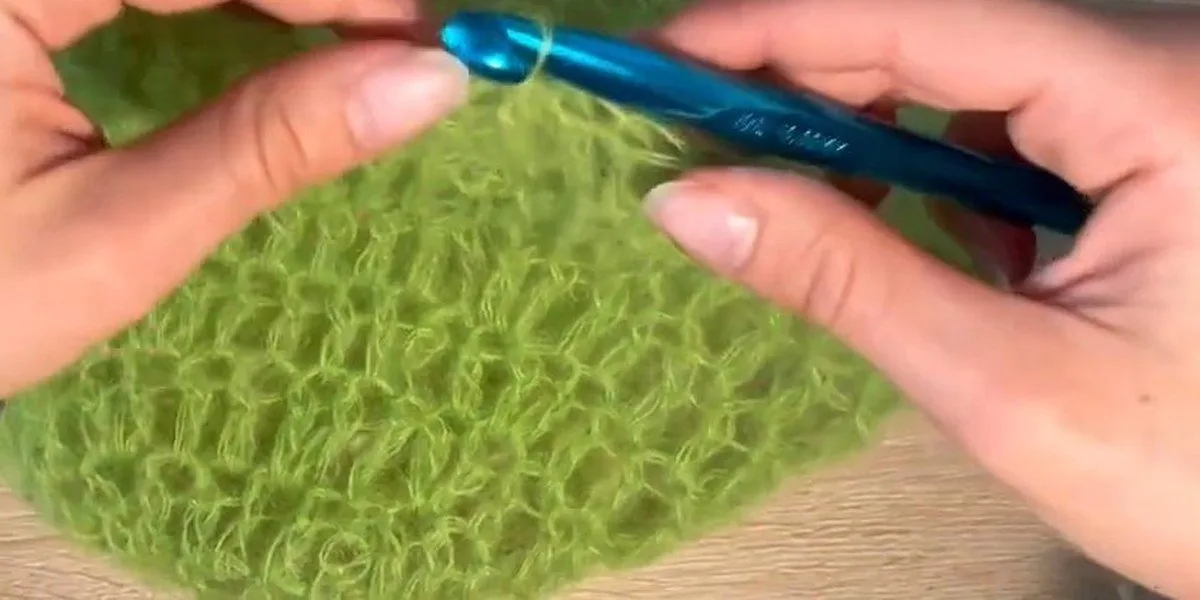
Step 10: Round 10: start the face opening
Chain 3 and work 1 dc in each stitch, but do not go all the way around. Stop about three quarters of the way, a little less if you want a wider opening, and turn. Try the hood on: the edge should sit just outside your eyebrows.
Step 11: Check the gap
The part you did not work is the face opening. In the sample it was a little less than a quarter of the round, wide enough for hair to come through. Wider or narrower is a matter of taste, so try it on before you go on.
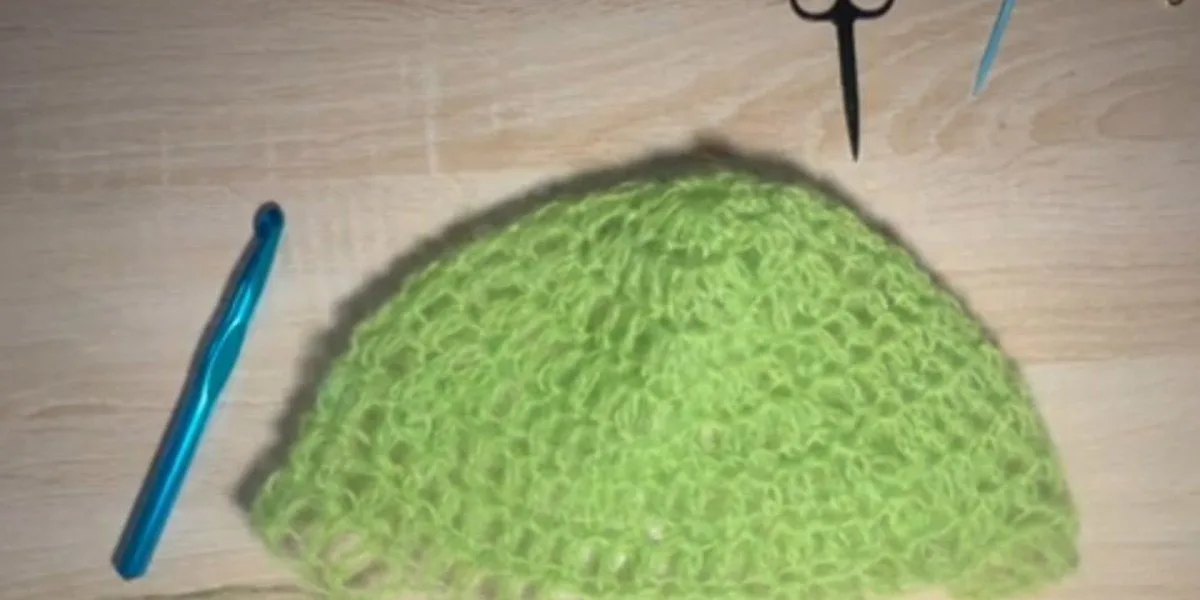
Step 12: Rows 11 on: chain 3, turn, double crochet across
Chain 3 and turn. Work 1 dc in each stitch to the end of the row, chain 3 and turn again. Keep working back and forth. The two panels grow down the sides of your face.
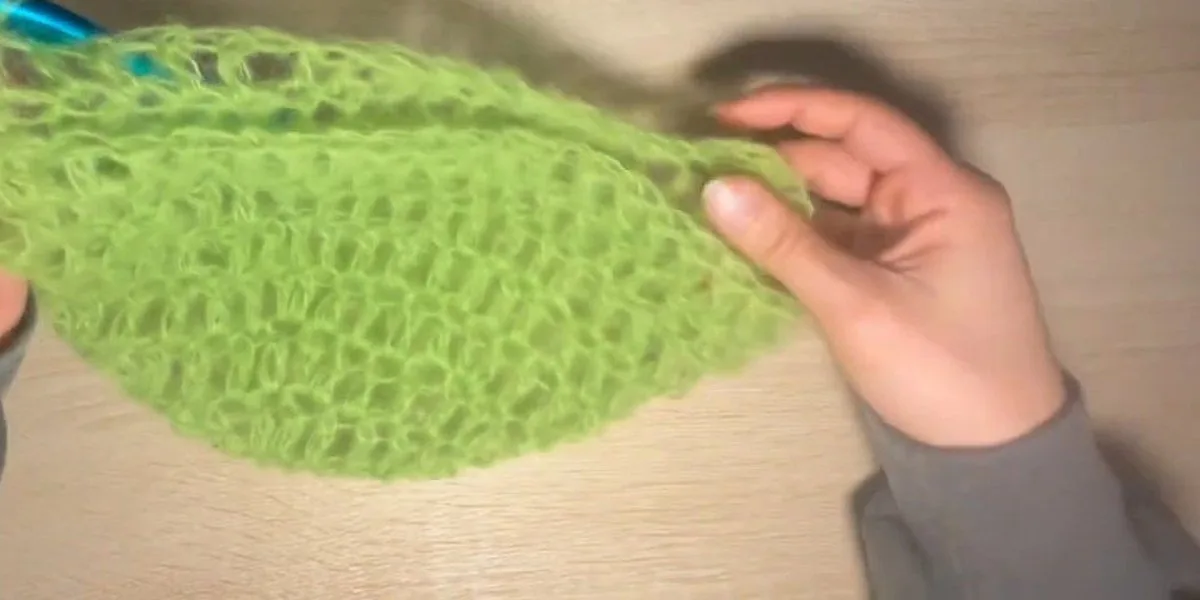
Step 13: Work down to where you want the chin
Keep going until the panels reach your chin, or a little below it for a longer neck. Try it on between rows. For a version that also covers the nose and mouth, keep going a little further.
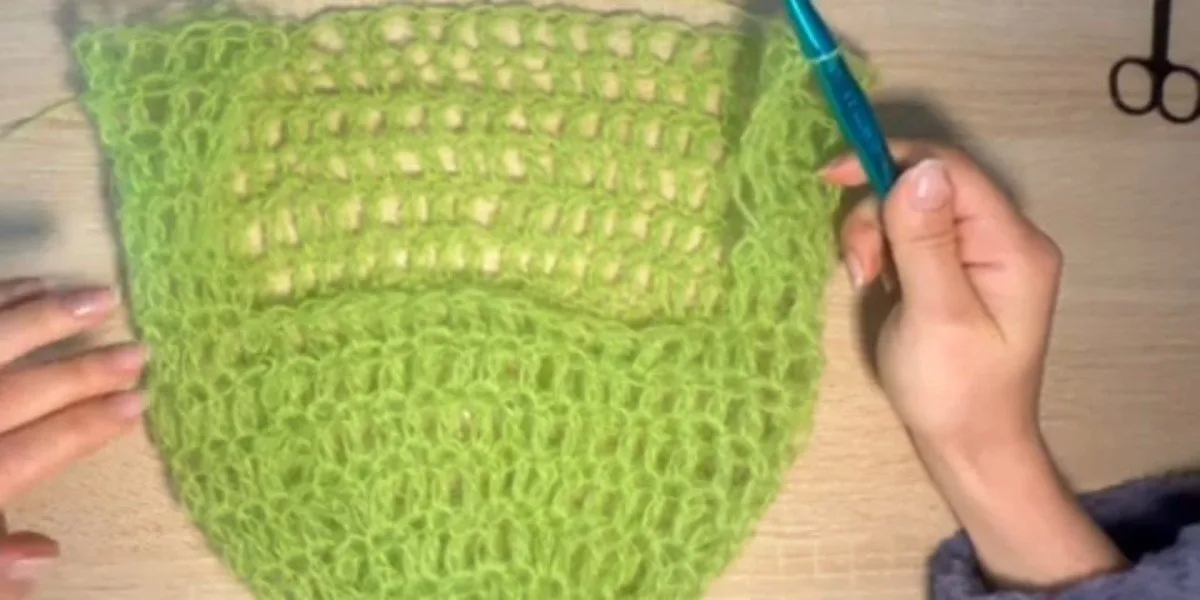
Step 14: Chain across the gap
Count the stitches along the top of the gap. In the sample there were 13. Chain about half of that, 7. Keep the chain shorter than the gap: if the two edges match, the hood looks like a helmet or chain mail.
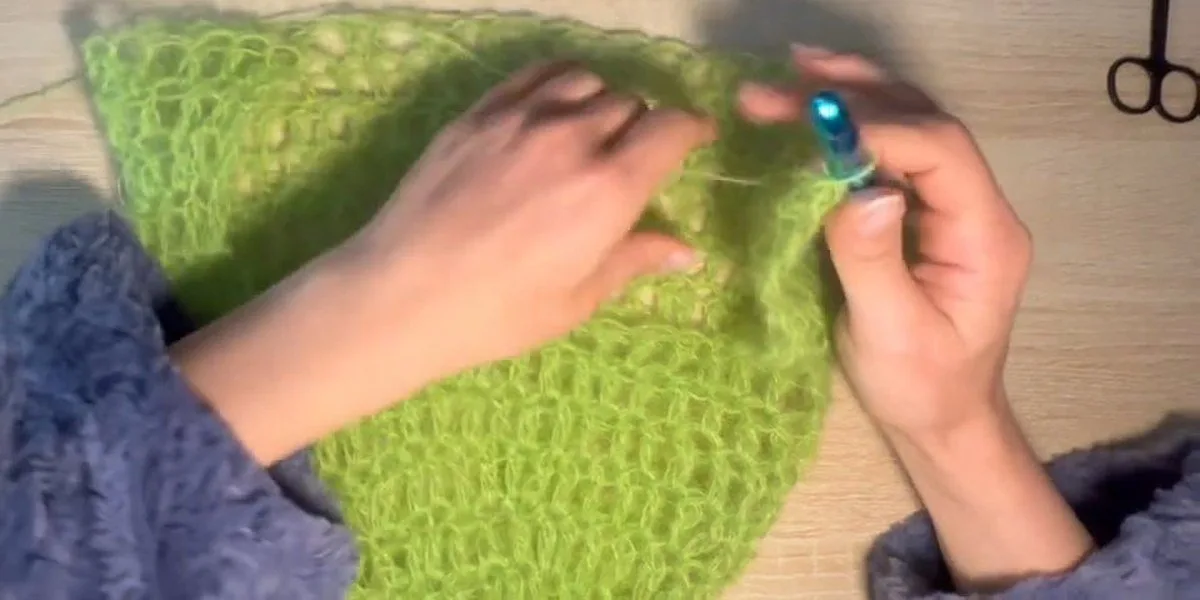
Step 15: Join the chain to the first stitch
Slip stitch into the first stitch of the panel on the other side. This closes the neck into a ring and is where the next round begins.
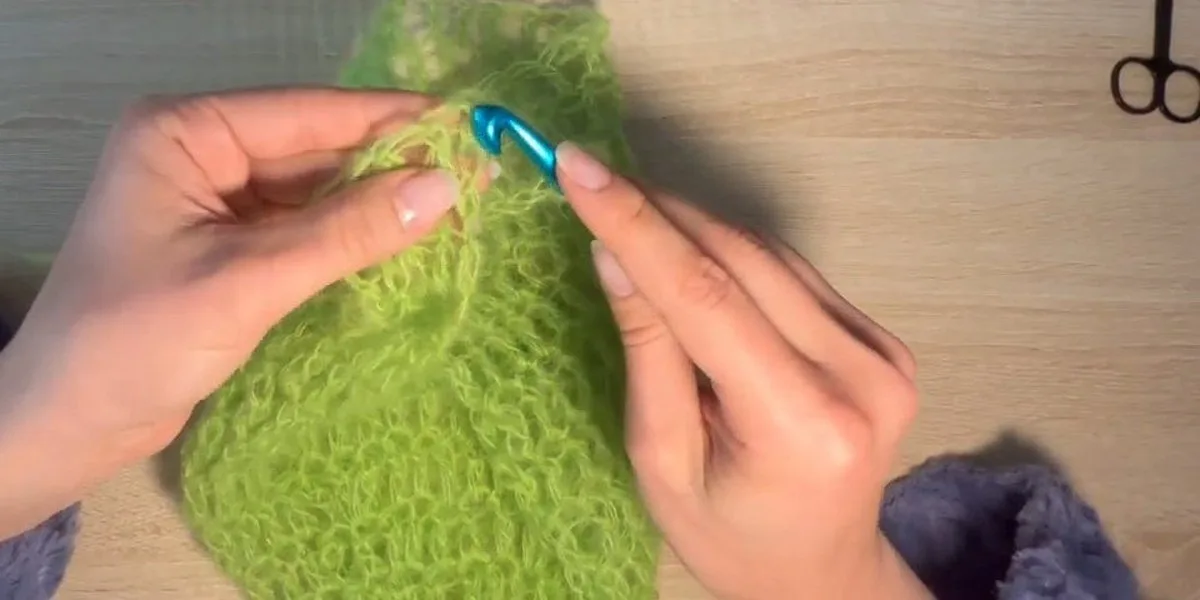
Step 16: Work the first round over the bridge
Chain 3, then work 1 dc in each stitch all the way around, and 1 dc in each chain of the bridge. The chain is a hard place to find a space for the hook, but it does not need to be neat. Join to the top of the chain 3.
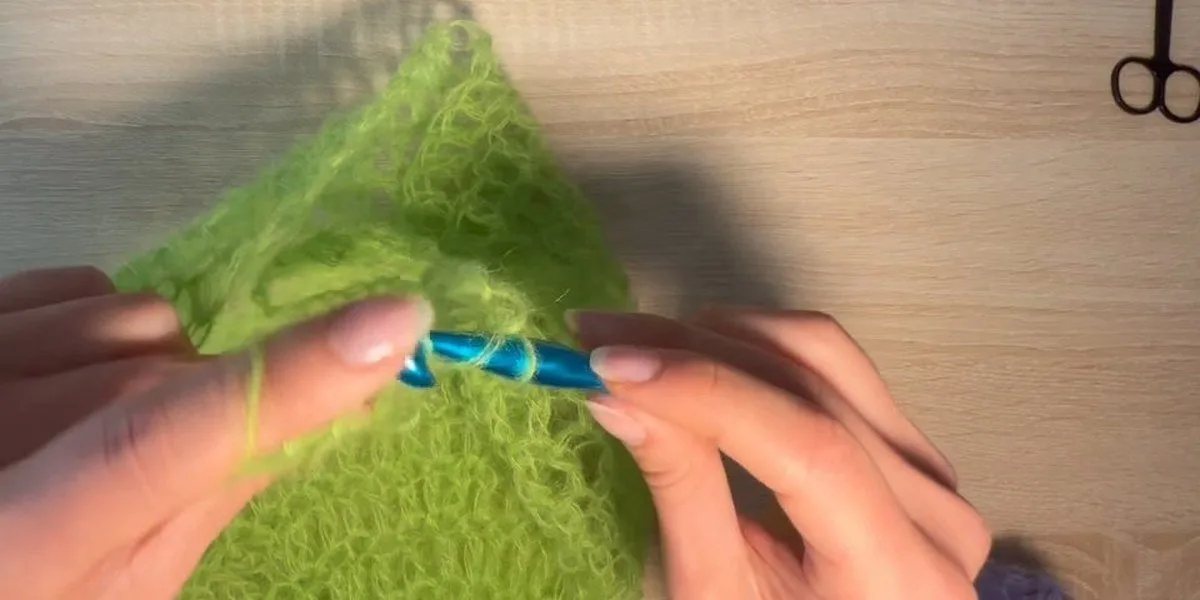
Step 17: Finish with plain neck rounds
Chain 3, 1 dc in each stitch, join with a slip stitch, and repeat until the neck is as long as you like. The sample worked three rounds in all after the join. How much neck to cover is your call.
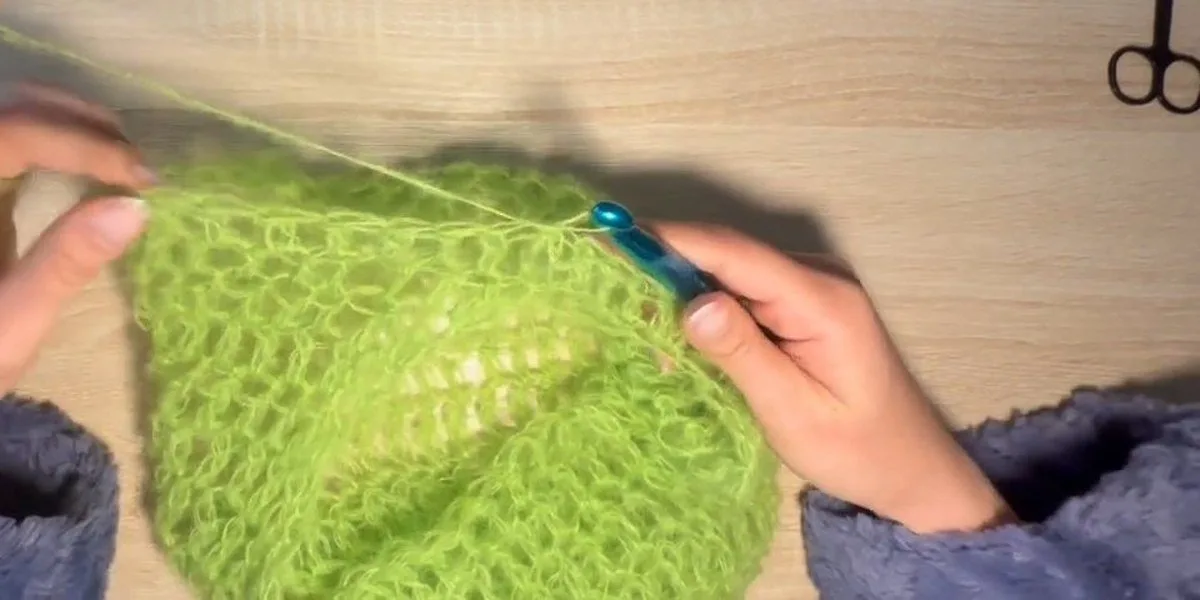
Step 18: Weave in the ends
Cut the yarn and thread it onto a tapestry needle. Weave the end in through the stitches, keeping it away from the face. Mohair hides ends well, so it does not have to be perfect.
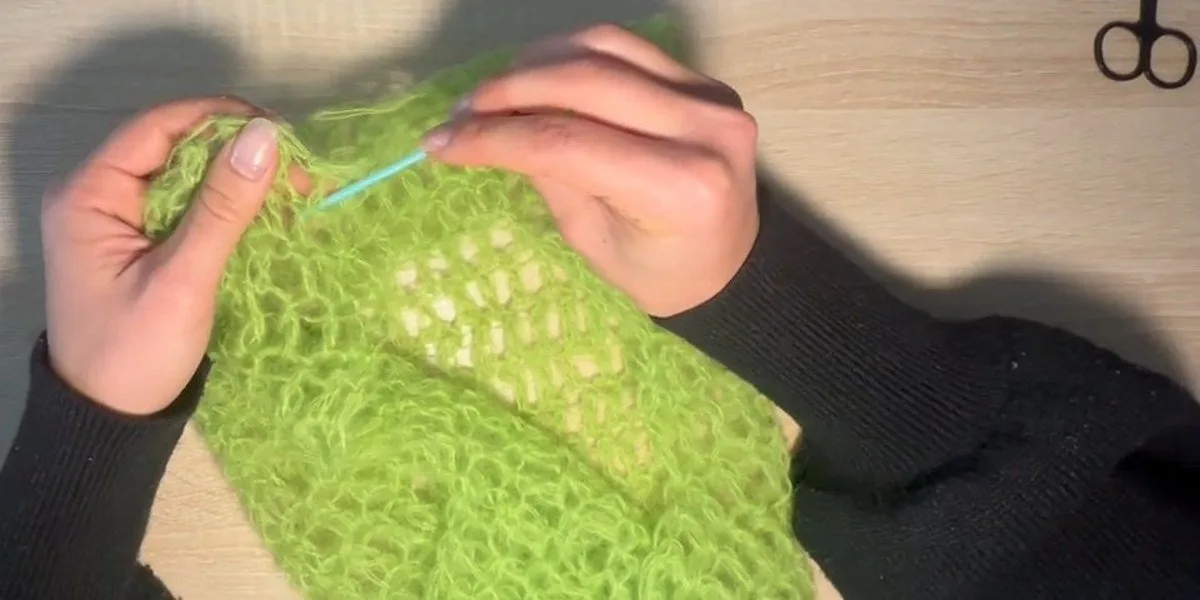
Step 19: Add the charms (optional)
Clip hoop earrings onto the mesh at a few spots. The sample has three, placed off centre on purpose. Skip this step on anything for a child, because earrings are loose small parts.
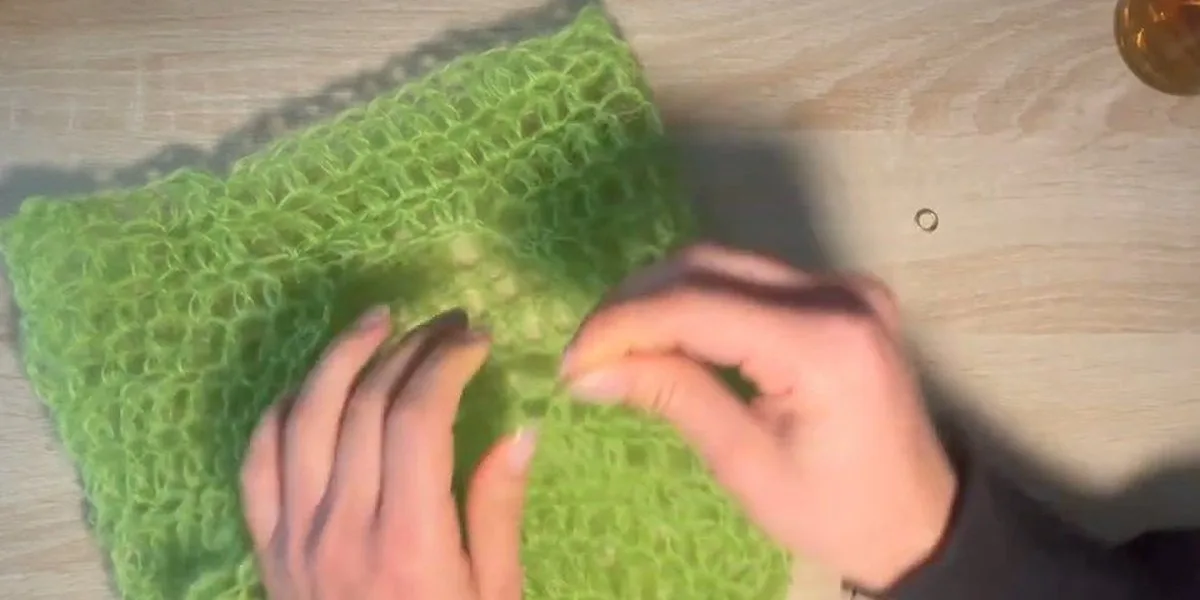
Crochet Balaclava Stitch Counts by Round
The design prints the repeats but not the totals, so here is the arithmetic. Each round starts with a chain 3 that counts as a stitch, and a repeat of 2 dc in one stitch then 1 dc in each of n stitches takes n + 1 stitches and makes n + 2.
| Round | Repeat | Repeats | Stitches |
|---|---|---|---|
| 1 | Magic circle: chain 3 and 11 dc | 1 | 12 |
| 2 | 2 dc in each stitch | 12 | 24 |
| 3 | 2 dc in 1, 1 dc in 1 | 12 | 36 |
| 4 | 2 dc in 1, 1 dc in 3 | 9 | 45 |
| 5 | 2 dc in 1, 1 dc in 4 | 9 | 54 |
| 6 to 9 | 1 dc in each stitch | 54 | 54 |
Adding the first five rounds gives 12 + 24 + 36 + 45 + 54 = 171 stitches. Each plain round adds 54, so three plain rounds make 333 in total. Your own count may be a stitch or two off, as the sample’s was, so count after round 3 and round 5 and carry on from your number.
The face opening and the bridge chain
Once the face opening starts, the stitches you work in each row are the round minus the gap. In a 54-stitch round, a gap of 13 leaves 41 stitches in every row. The bridge chain is about half the gap, rounded up, and the neck ring is the round minus the gap plus the chain. These are our figures, built on the sample (gap 13, chain 7), so check them against your own count.
| Gap at the top | Bridge chain | Stitches per neck round |
|---|---|---|
| 9 | 5 | 50 |
| 11 | 6 | 49 |
| 13 | 7 | 48 |
| 15 | 8 | 47 |
| 17 | 9 | 46 |
A wider gap gives a wider face opening and a looser neck, and a narrower gap does the opposite. Count the gap before you chain, because it changes with how far round you stopped in step 10.
Sizing a Crochet Balaclava to Your Head
The design has no size chart: it is fitted by trying it on. The sample was checked against the head after round 4 and round 5, and the plain rounds went on until the hood reached the eyebrows. If you want a number to work from, start with a head measurement, which the Craft Yarn Council says to take by placing a tape across the forehead and around the full head. Its head circumference chart lists these sizes.
| Size | Head (in) | Head (cm) |
|---|---|---|
| Preemie | 9 to 12 | 23 to 30.5 |
| Baby | 14 to 16 | 35.5 to 40.5 |
| Toddler | 16 to 18 | 40.5 to 46 |
| Child | 18 to 20 | 45.5 to 51 |
| Tween | 20 to 22 | 51 to 56 |
| Woman | 21 to 23 | 53 to 58.5 |
| Man | 22 to 24 | 56 to 61 |
How to use the chart: a hat or hood is worked a little smaller than the head so it stays on. Lion Brand’s hat size guide says a finished hat should be 2 to 4 in smaller than the head, and stretchier stitches need more. A mesh like this one has give, so aim for the lower end of that range, and hold the flat disc against your head after round 4 and round 5 before you commit to the plain rounds. We did not test this on a head, so treat it as a starting point.
For comparison, the Red Heart ribbed balaclava prints finished head sizes of 18 1/2 in (47 cm) for ages 2 to 4, 19 in (48 cm) for ages 6 to 10, 19 1/2 to 20 1/2 in for an adult small and 21 to 22 in (53.5 to 56 cm) for an adult large. Oombawka prints 18, 19, 20 and 21 in for children and 22, 22 and 23 in for adults.
How the hook and the yarn compare
The hook is 10 mm. The Craft Yarn Council’s crochet row puts 9 to 15 mm in the super bulky category, and the other balaclavas listed below print hooks from 4.5 to 8 mm. Fine mohair held double is much lighter than a super bulky yarn, so the big hook is a deliberate choice: it opens the stitches into a mesh. A smaller hook gives a denser, warmer hood.
Where a Crochet Balaclava Goes Wrong
Four things go wrong most often with this hood, and all four show up before the neck.
The crown cups in too early
In this crochet balaclava the disc starts to curl in at round 4, and the sample was left that way because it becomes a hood anyway. If the hood feels too tight when you try it on, work round 5; if it feels loose, the design lets you skip round 5.
The round counts drift
Counting is the only guard. After round 3 you should have 36, after round 4 you should have 45, and after round 5 you should have 54. If you are one or two out, as the sample was after round 3, carry on from your number rather than ripping back, because the plain rounds do not care.
The two panels are the same length as the gap
If the bridge chain matches the gap stitch for stitch, the lower edge of the crochet balaclava looks like a helmet or chain mail, and it sits stiffly under the chin. Make the chain about half the gap, as in the table above, so the neck hugs.
The written steps and the sample disagree
The plain rounds are labelled 6 to 9 in the steps but the sample has three, and some descriptions of this design call the neck rounds single crochet where the steps say double crochet. We follow the steps and the sample’s fit: plain rounds until the hood reaches your eyebrows, double crochet for the neck. Single crochet would give a shorter, tighter neck.
Making a Crochet Balaclava Warmer or Safer
A fine mohair mesh on a 10 mm hook is a style piece more than a winter layer: the stitches are open and the wind goes through them. If you want warmth, use a heavier yarn and the smaller hook that goes with it, as the five other patterns below do: for example Oombawka works half double crochet at 11 stitches over 4 in on a 6.5 mm hook, which makes a dense fabric.
For anything made for a child, keep the crochet balaclava free of cords and ties. The Consumer Product Safety Commission calls hood and neck drawstrings on children’s upper outerwear in sizes 2T to 12 a strangulation hazard and recommends alternatives such as snaps, buttons, Velcro and elastic. Its page does not name balaclavas, so applying it here is our judgement, but this design has no cords, and a hood with none is the safe way to keep it. Leave off the hoop earring charms on children’s hoods too, as they are loose small parts.
Five More Free Crochet Balaclava Patterns
Here are five other free balaclava patterns we read in full, for a denser fabric or a printed size. For each one we list only what the page prints, and say which numbers are missing.
| Pattern | Size printed | Hook | Yarn |
|---|---|---|---|
| One Skein Balaclava (Heart Hook Home) | None printed | 6 mm | Worsted, about 300 yd; gauge 7 stitches and 10 rows over 4 in |
| Sherpa Balaclava Hood (Left in Knots) | Child and adult; no head size | 8 mm printed (10 mm in the supply list) | Lion Brand Go for Fleece, child 89 yd, adult 105 yd |
| Snug Balaclava (LisaAuch) | Small, medium, large; head 22 and 24 in for two sizes | 4.5 mm, 5 mm | Aran weight, 350 g for small and medium |
| Warm Winter Ski Hat (Oombawka) | Seven sizes, head 18 to 23 in | 6.5 mm | Red Heart Soft Essentials Bulky, 151 yd for one child size |
| Ribbed Balaclavas For All (Red Heart) | Four sizes, 18 1/2 to 22 in | Not printed in the page text | Red Heart Super Saver, 1 skein |
What the five pages leave out: only one of them prints stitch counts for more than three sizes, none ties its sizes to the Craft Yarn Council head chart, none gives yardage for every size, three print no gauge (Left in Knots, LisaAuch and Red Heart), and none compares face opening styles. Two pages also disagree with themselves: the Left in Knots hook is printed as 8 mm but its supply list links a 10 mm hook, and the Red Heart page names a kit hook that does not match the text of its picture, so trust the named hook and check your gauge.
More wearables on our site: the crochet hat for men, the free crochet fingerless gloves pattern and the easy crochet scarf pattern.
Crochet Balaclava FAQ
What hook and yarn do I need for a crochet balaclava?
This crochet balaclava uses a 10 mm hook and fine mohair held as two strands, or any fine yarn. The design prints no yardage, so buy one skein more than you think you need and keep the label.
How many stitches does the crochet balaclava crown have?
By our count the crown has 12, 24, 36, 45 and 54 stitches in rounds 1 to 5, which is 171 stitches in all. Three plain rounds of 54 bring it to 333 before the face opening.
How do I size a crochet balaclava?
Measure your head with a tape across the forehead and around, then choose from the Craft Yarn Council chart. The crochet balaclava here is fitted by trying it on: stop increasing when the disc fits, and work plain rounds until the hood reaches your eyebrows.
How wide should the face opening of a crochet balaclava be?
In this crochet balaclava the opening is about a quarter of the round, a little less than that if you like it snug. The sample’s gap was 13 stitches in a 54-stitch round, and it is a matter of taste, so try it on before you chain.
Is a crochet balaclava warm?
A mesh from fine mohair and a 10 mm hook is open and more of a style piece than a winter layer. For warmth, use a heavier yarn on a smaller hook, such as the 6.5 mm half double crochet in the Oombawka pattern.
Can I make a crochet balaclava for a child?
Yes, but keep the hood free of cords and ties, since drawstrings on children’s upper outerwear are a strangulation hazard according to the Consumer Product Safety Commission. Leave off the hoop earring charms too, because they are loose small parts.
A Scarf to Wear With Your Balaclava
Once the first crochet balaclava is done, make a second in a denser yarn for the cold days. A matching easy crochet scarf or a pair of fingerless gloves is a quick next project, and the moss stitch crochet scarf shows a firmer stitch for warm things. You can also browse every free pattern on the site.
To finish a cold-weather set, add a pair of crochet leg warmers.
Sources
- Heart Hook Home, One Skein Balaclava
- Left in Knots, Crochet Sherpa Balaclava Hood
- LisaAuch Crochet, Snug Balaclava
- Oombawka Design Crochet, Warm Winter Ski Hat
- Red Heart, Crochet Ribbed Balaclavas For All
- Craft Yarn Council, head circumference chart
- Craft Yarn Council, body sizing
- Craft Yarn Council, yarn weight system
- Lion Brand, hat size guide
- Consumer Product Safety Commission, drawstrings in children’s upper outerwear
Pattern credit: the balaclava design in this guide is by Mary Had A Little Lamb. Find more of their work on the YouTube channel Mary Had A Little Lamb.