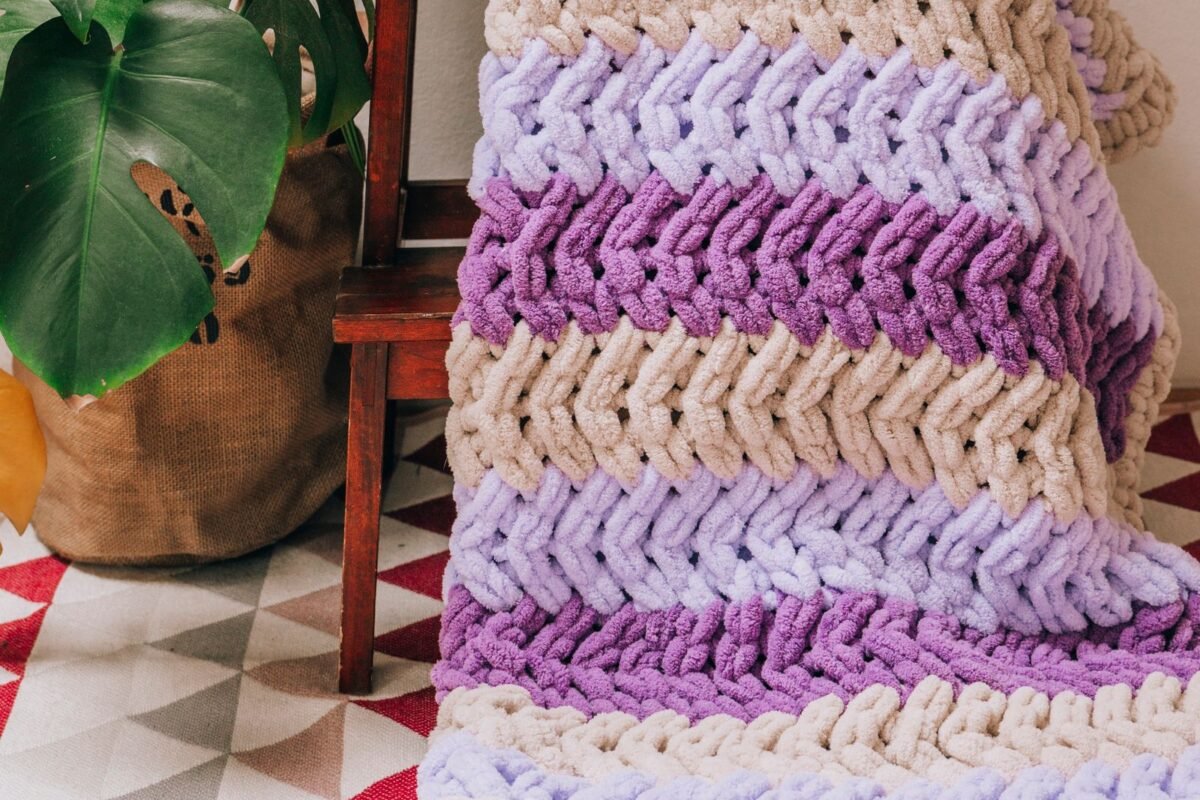
Density and yarn appetite
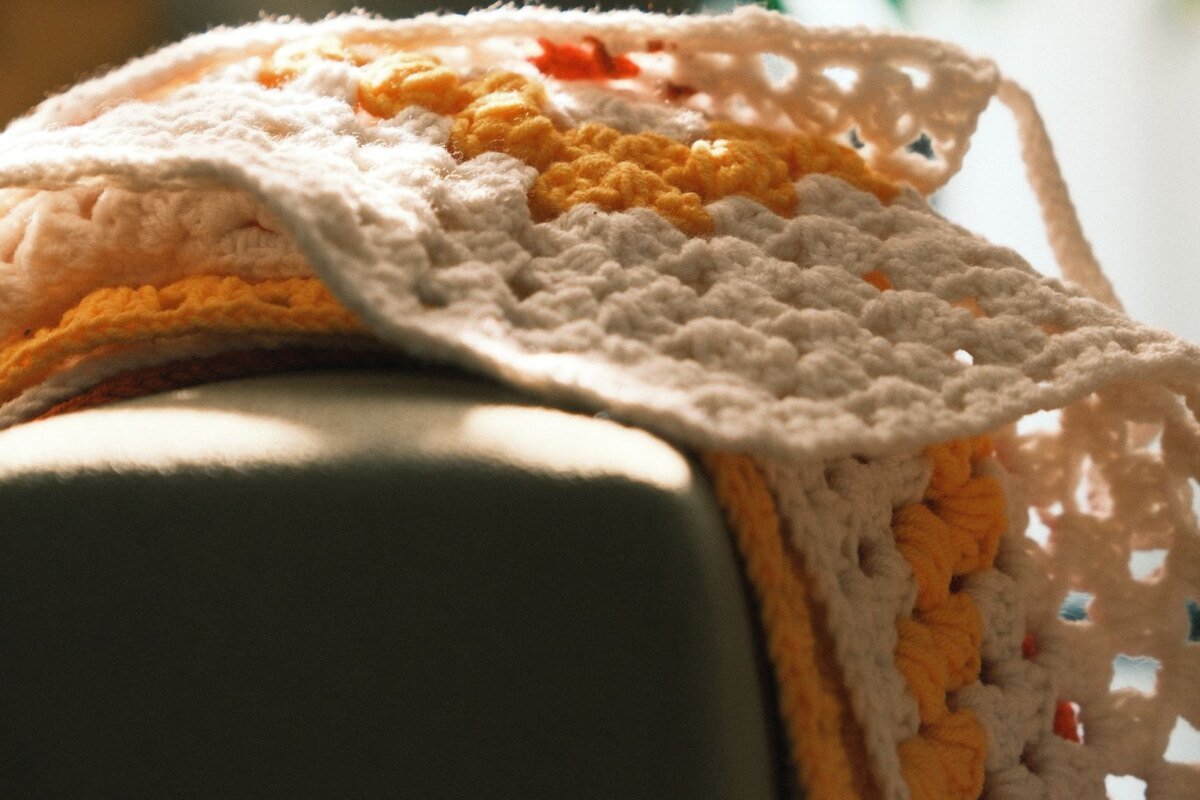
A raised or textured stitch pulls more yarn into the same square inch than a flat one. Waffle, bobble, puff and popcorn stitches can use around half again as much yarn as plain double crochet over an identical finished area. When a pattern gives a yardage, that figure belongs to that stitch. Substituting a textured stitch into a plain pattern without recalculating is the most common way a blanket runs out of yarn.
The multiple is not optional
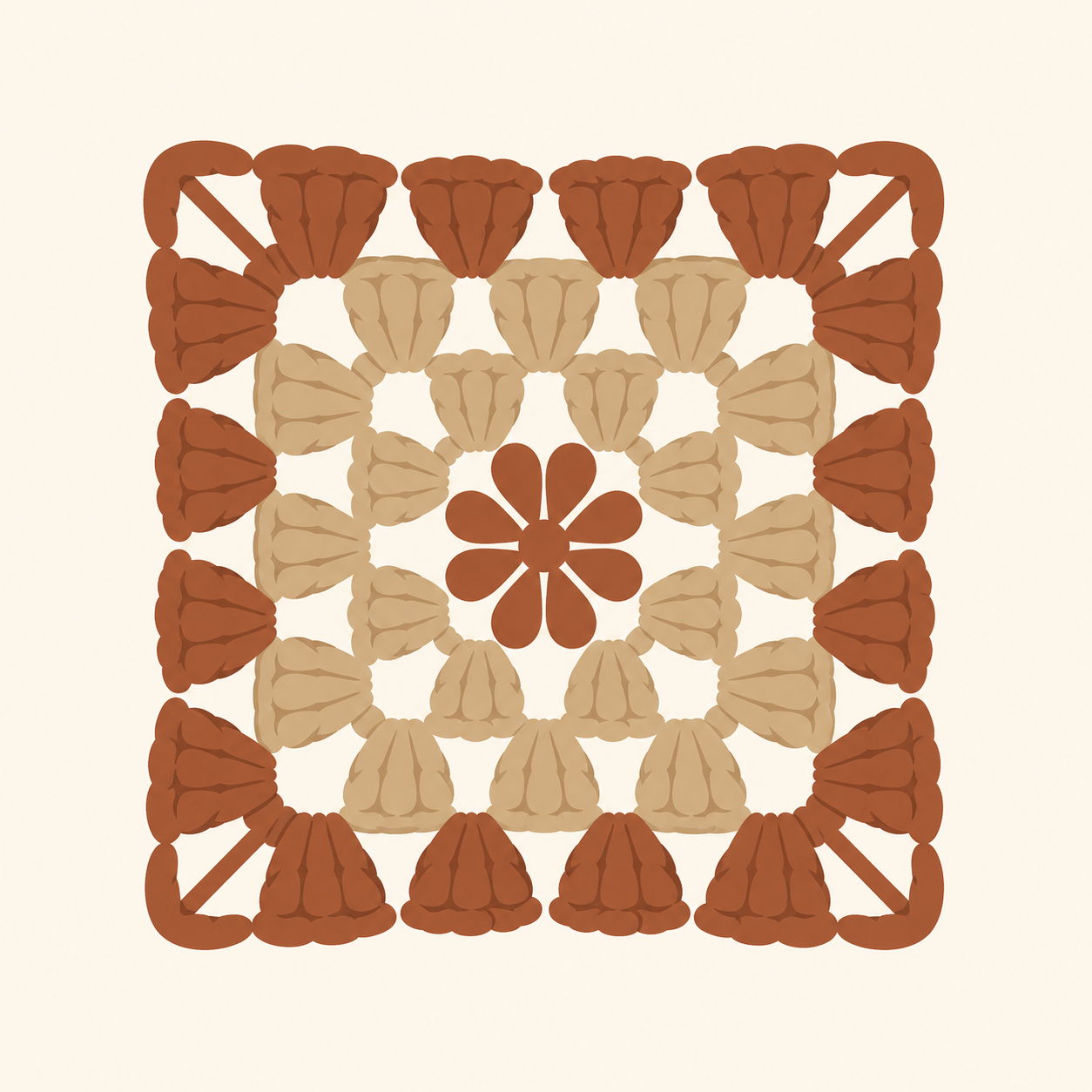
Every repeating stitch pattern works over a multiple, usually written as a multiple of some number plus a few extra chains for the edge. Shell stitch commonly repeats over a multiple of six plus one. Get the foundation chain wrong and the failure appears at the end of the first row, after you have already worked every stitch of it. We publish the multiple for every stitch we cover, at the top, before the tutorial.
Borders are structural, not decorative
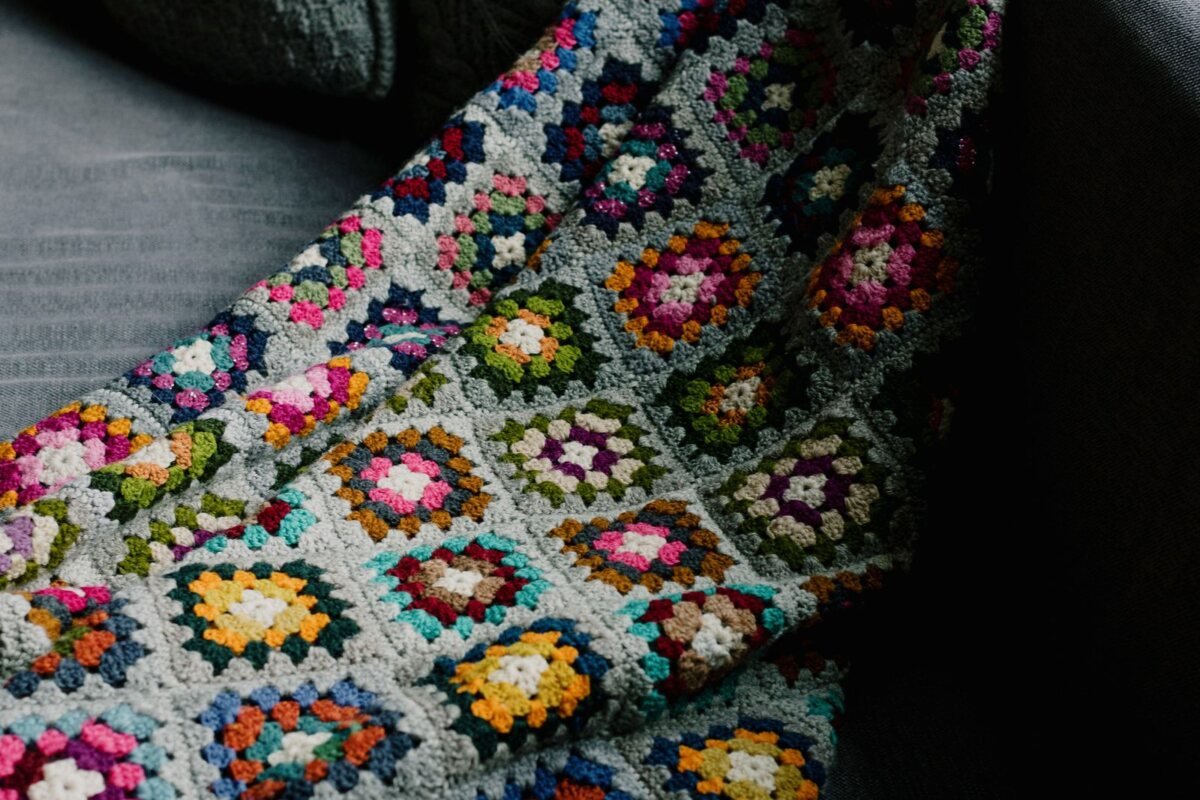
A border does three jobs. It hides the uneven edge that every hand worked blanket has, it stops the fabric curling, and it adds finished size. That last one matters: four rounds can add three or four inches to every dimension, which is enough to take a blanket from a lap size to a proper throw. Plan the border into your measurements rather than discovering it afterwards.
Stitch names, both conventions
Crochet uses two naming conventions that clash: what one calls a double crochet, the other calls a treble. Same stitch, different name. Wherever the difference matters we give both, so a pattern from any source stays unambiguous.